Showing posts with label 3 stars. Show all posts
Monday, February 23, 2015
Obsidian by Jennifer L. Armentrout
This book. I wanted to hate it. I should have hated it. But somehow, I didn’t. Don’t get me wrong, there are a few things I did indeed hate about this book, one of them being Daemon, the main character’s love interest. However, despite its several flaws and bad relationship, I enjoyed it. Something about it made me want to keep reading. It was an overall fun book, and each time I put it down I looked forward to picking it back up.
I’ll begin with the elements of this book that I did like. The writing, though simple, was very easy and quick to read. It wasn’t anything spectacular, but it was pleasant, nonetheless. The main character, Katy, was likable for the most part. She seemed fairly realistic, someone you could easily relate to and be friends with. There is a tiny bit of character growth, but she mostly remained unchanged.
Katy’s character did have her flaws, however. The most obvious one that is focused on throughout the book, is her overwhelming attraction to Daemon, her alien neighbor. I disliked Daemon so much. He is portrayed as a flawlessly attractive guy with perfect abs and piercing eyes. But there is nothing at all attractive or likable about Daemon. He is a straight up asshole. From his first encounter with Katy, he acts ignorant, arrogant and very mean to Katy. Throughout the book he flip-flops from this terrible jerk to a temporarily caring and kind guy. And Katy gets fooled time and time again. She knows what a jerk he is, and yet her intense sexual attraction for him is too overwhelming to ignore. What I don’t understand is how one can be so physically attracted to someone who is such an ass? It isn’t realistic or plausible. Regardless, their relationship is nothing short of being screwed up. Daemon verbally treats Katy like crap and is mentally abusive to her. He blames her for nearly getting potentially raped and killed. And not to spoil anything, but the end of chapter 26 really pissed me off and showed what a true asshole Daemon is.
Aside from Daemon being a terrible person, Obsidian was a somewhat predictable book. It continuously reminded me of Twilight, in more than one aspect. Dee was a pretty nice character, even though she was clearly just a pawn to the main focus of the book- Daemon and Katy’s relationship.
The alien thing was equally disappointing and enjoyable. I wouldn’t call what Daemon and Dee are aliens, as they were far from any definition of the term I can think of. Instead, they were a completely other type of being that I thought was unique and refreshing.
Although the relationship in this book was awful, and its resemblance to Twilight off-putting, I did enjoy reading Obsidian. The well-written main character made it easy to read and enjoy, despite its many downfalls. I likely won’t pick up the next book in the series, as the ending hints toward it being all about Katy and Daemon’s relationship. I’m not sure what all the hype is about for this series, unfortunately.
Sunday, February 8, 2015
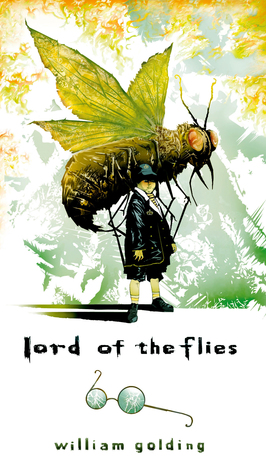
Lord of the Flies by William Golding
This book delivered exactly what I expected it to. It is a rather simple story featuring a group of schoolboys whose plane crashes on a deserted island. There, they must survive, first against the struggles of being on the island, and soon against each other. Holding an atmosphere of thick, dripping heat, and untamed jungle, I could easily feel the setting in which the story takes place.
Though this story is caked in symbolism and themes, there is one that stands out above the rest. The decline of the sanity and sensibleness of the characters, as they’re overwhelmed with freedom and lack of order. As children, it is easier for them to revert back to primitive ways, which is shown increasingly throughout the book. The character Piggy, who is a symbol of wisdom and common sense, is just about the only thing allowing some sense of law within the group.
The decline of the group’s order was beautifully shown as this short but potent novel progressed. Just as well, the immense imagery made the setting of the island seem very real. The characters portrayed a variety of mental states, all of which are greatly effected throughout this novel. Though a story simple enough to be read by nearly anyone, its dark undertones and shocking themes made it a hearty and complex read.
Monday, October 13, 2014
Goddess of the Night by Lynne Ewing
I first started reading this series back in middle school and was completely engulfed in the witchy world of the characters. I was lucky enough to find books 1-9 at Goodwill several months ago, and now I’ve decided to reread them to see how I like them now.
The first book of the Daughters of the Moon series was a really fun and quick read. I read it mostly at night, which emphasized the slight creepiness of when Vanessa, the main character, was being followed. The writing was pretty juvenile, including a lot of short, simple sentences. However, when there was description, it was more enjoyable, especially when the girl’s powers were being explained.
The overall storyline was extremely predictable. It is easy to see from the beginning who the bad guy is going to be. The characters were definitely underdeveloped. Vanessa, despite being popular and cool, is a regular, boring girl, with no back story and hardly any personality. The others, though they had a bit more personality, still did not seem very believable. Each character just seemed to be contained of a different cliche high school group.
The way the characters meet was unrealistic. Vanessa acts like Serena is her friend almost instantly, when all she did was go over her house for a psychic reading. They become friends without ever really being friends. Also, the relationship between Vanessa and Michael is very forced. Despite Vanessa telling the reader that she has always liked Michael and that they apparently had something going before the start of the book, it still seemed to develop unnaturally, and there is no concrete reason given as to why Vanessa even likes Michael. Also I like how the character of Stanton developed throughout the story, even though he rarely appeared.
So there were a lot of things wrong with this book, but fortunately, those faults didn’t stop me from liking it. I am a sucker for girls with magic powers, and the lore behind them, especially moon driven powers. Though it is only touched upon in this book, through the character Maggie, I love the Greek mythology aspect of their magic, as well.
I also really liked how Vanessa didn’t take any sexist shit. That’s something I did not notice the first time reading this, but finding them this second time made me appreciate this book even more.
There was definitely a bit of nostalgia going on for me while I was reading this book, which is perhaps why I liked it more than I should have. Regardless, if you are willing to overlook this book’s flaws, it’s worth a read. I definitely recommend it for a younger audience, like middle schoolers. With it’s subtle basis in Greek mythology, and slight feminist undertone, I think this is a great book for young girls. I will be continuing the series, and I’m excited to see if there is any character development.
Wednesday, September 17, 2014
Divergent by Veronica Roth
I had been thinking about reading it for a while, but I didn’t pick up the book Divergent until after I watched the movie. Although this will not be a review of the movie, the one major thing the film lacked was what finally pushed me to pick up the book. While the story was exciting and entertaining, the one thing I was hoping for never appeared. And because I think that part is so vital to the world building, I unfortunately cannot give this book more than three stars.
I had heard much hype about Divergent, even before it was turned into a movie. Although it sounded pretty cool, the main reason I didn’t pick it up immediately was because its story line sounded bland. Yet another dystopian YA in which a girl tries to overthrow the government, and has a surprising love interest. After reading it now, that is pretty much exactly what it is. However, there is something about it that makes it worth the read. The growth of the main character is a beautiful and surprising aspect of this story. As well as the amazing ending that the movie did not portray nearly as well as the book.
Set in a dystopian world that separates people into factions, the story follows Tris (Beatrice) a teen girl who discovers that she is a Divergent. The character of Tris lacks personality in the beginning, perhaps because she came from the faction Abnegation, the selfless. But as she progresses through the story, she changes. Instead of just standing back and letting things happen to her, she begins to make things happen. She starts off, and continues through most of the book, to be a stereotypical teenage girl, not fully thinking things through and acting on impulse. However, near the end, as the conflicts arise, she shows her true self to be brave and smart.
Tris’s relationship with Four, while highly predictable, actually plays out nicely. It isn’t simply lust. It grows as the story does, making it seem much more believable. With the exception of Four, and a few others, most of the other minor characters lack depth. They are made to seem dimensionless. I don’t know if this is to show the meaning of the factions, or if it is simply due to bad writing.
The factions are pretty fun, adding a lot to the story. They really intrigued me, and made me want to learn more about the world. However, this is where the book majorly lacks. Aside from the basic facts about each faction, we never really find out how people in each of them live. Even Dauntless, the most mentioned faction, has many holes in the information we learn about it. This is true with all the others as well, especially Amity. Along with this lack of faction information, we learn little to nothing about the world itself. The city they live in doesn’t even have a name as far as the book tells us. There is simply life in the city, and that’s all there is. Aside from mentioning what’s beyond the city, no one questions it, or wonders how big the country/world even is. As world building is crucial to a dystopian story, I found the lack of it very unfortunate.
Another slight hole in the story was the explanation of the Divergents. Although the main conflict isn’t solely based around the discovery of Tris being a Divergent, it still has a lot to do with it. This makes me wonder how the issue was never really faced head on before. Clearly, Tris is not extraordinary, and people are all extremely complex. So why is it only now that the Divergents are becoming an issue? And how many Divergents are there really?
With the lack of world building being its biggest downfall, another was the writing. Though not awful, it is very simple and unembellished. There is a lot of telling, rather than showing. Through most of the book, the main character’s voice is not very strong. Along with this, there are a lot of cliche lines and repeated words/sayings within a short amount of time. Luckily, the exciting story, and character growth make up for the mediocre writing.
Even with so many flaws, I still found this book to be incredibly entertaining. The training especially is exciting and fun to read about. I think it’s a story that both girls and boys can enjoy and get into. The romance aspect is kept to a minimum, so as not to be overwhelming. The training and other initiation processes are really cool, adding a lot of action to the story. As well as the action, there is a lot of thinking and life decisions being made by the main character. The end especially brings a lot of contemplation, about what is right, into the story.
The ending was definitely the strongest point of the story. If you are hesitant to read Divergent, read it for the ending. So much happens in such a short amount of time. There is character building with both the main character, and many of the minor characters. We discover so many things about people and the society of this book. Tris’s parents disprove the statement ‘Faction before blood.’ Tris standing up to Marcus truly shows how far she has come as a person. It opens up so many questions and really makes you want to find out what happens next.
The ending of this book was fantastically done, and it only leads into the second book, Insurgent. I have begun reading it, and have discovered that much of the unsaid information about the factions and world are slowly being uncovered in it. So while Divergent was not a spectacular book, it is very entertaining and an enjoyable read. I think it will be worth reading if you’re willing to read the rest of the trilogy, and I plan to do so.
Tuesday, June 10, 2014
Burn for Burn by Jenny Han and Siobhan Vivian
This books left me with such mixed feelings! In a way, it was a lot like what I excepted- a basic plot about teen girls getting revenge on those who’ve wronged them. However, with very pleasant writing and a nice bunch of characters, it proved to be a better book than I was anticipating.
The writing and plot were both enjoyable and well-paced, giving me a comfortable feeling as I read this book. Though the writing is clearly in the point of view of teenage girls, it doesn’t take away from the subtle beauty it holds, which captivated me as I read. In fact, I really appreciated the three POVs, ranging from Mary, the most innocent and sweet of the three, to Lillia, who’s just starting to truly taste life, to Kat, who’s more experienced and seasoned in life.
There are a lot of high school stereotypes used, as expected, but they were surprisingly tolerable. Rennie is the stereotypical mean girl, who’s easy to hate. She was one of the most unrealistic characters, but luckily most of the other ones were not so bad. I really enjoyed the use of flashbacks in this book. They were refreshing to read, as the girls remembered the trauma they endured that led them to this point of revenge.
I really liked the way the girls met, and their subtle and sometimes surprising connection to each other. It was exciting as they progressed with their plans for revenge. There were lots of little surprises throughout the book, which were nice and enjoyable.
The biggest downfall of this novel was Mary. Her character started out really nicely, I thought, but continued going downhill until the very end of the book. Aside from her past, her character is very blurry and lacking in personality. Her voice continues to become weaker as the plot moves along. Eventually I got really bored of reading about her.
However, the worst part about her comes at the end, with an event way too similar to the book/movie Carrie occurs. If not for this event, if not for Mary’s untold powers, I would have given this book four stars. The addition of unearthly powers was just too farfetched, and a desperate pull in the wrong direction. I wanted this book to solely focus on real life issues, and the discovery of Mary’s powers ruined that for me.
Unlike Mary, the characters of Lillia and Kat, two former friends, were very strong and believable. Naturally, I disliked Lillia from the start, but grew to like her more and more. She is smart and sensible. If not for the influence of her best friend Rennie, she would be a lot better off. However, because of this, she proves to be a more realistic, flawed character. As well, Kat is fierce and brave, the rebel of the group.
Overall, I liked this book more than expected. It was a nice contemporary YA book, though it did have several weak points, which left me with mixed feelings toward it. I’m unsure if I will pick up the second book or not.
Wednesday, May 21, 2014
The Exraordinary Secrets of April, May & June by Robin Benway
To be honest, I only picked this book up because of its gorgeous cover and clever title. However, based on those two things, along with the short summary on the back, I expected it to be filled with puke-worthy dialogue and cheesy relationships. Instead, I found the dialogue to be its strong point, and overall, for it to be a decent read.
This was a pretty light YA read, something I wouldn’t normally pick up. Though it clearly was no literary masterpiece, I was surprised at how much I enjoyed it. I guess it was what I needed in between reading much heavier books. Also, it reminded me a bit of the show H2O, in which 3 different girls discover they are mermaids, which was nice.
Following three sisters, April, May and June, this story is about how they rediscover the magic powers that they have, and how they deal with them, including the consequences of using them. Even more so, it is about the sisterly bond between the three girls, which, although put to the test, proved to be strong. The three sisters’ personalities varied greatly. They were very stereotypical, but held more depth than I expected. The dialogue between them was quite realistic. Their constant arguing was, at times, annoying, and at others, entertaining. I especially appreciated May’s extensive use of sarcasm.
The overall plot was also very enjoyable. Although it was just the everyday life of teenagers, it felt real and whole, with a strong climax and resolution. The relationships were not instantaneous, but they were pretty predictable. Luckily, the story was not solely about the relationships between May and Henry, and April and Julian. It focused mainly on the relationship between the three girls and how each of them dealt with their powers, as well as the drama in their lives.
While I liked how they rediscovered their powers, instead of just randomly obtaining them, I wished there had been more of an explanation. Their grandmother is mentioned once in regards to it, but there is never any solid evidence given as to why the girls have their powers. The story lacked depth in that way. It could have been a lot deeper and more interesting if they had tried to find the reasoning behind their powers or something. Likewise, the character of Avery confused me greatly. I wasn’t sure if she was supposed to be some sort of ghost or a real person or something else completely. The girls briefly discuss her, but no real answer is given as to who she is.
The biggest downfall of this book was its predictability. Nearly the entire thing was predictable, from the relationships to the climax. It was easy to figure out what would happen next, but at least it was enjoyable finding out how the characters would get to that point.
For those reasons, I can’t give it more than 3 stars. I really enjoyed this book, and I will likely read it again. However, its predictability and the holes in the explanation to the girls powers left me feeling like the story was unresolved.
Tuesday, April 22, 2014
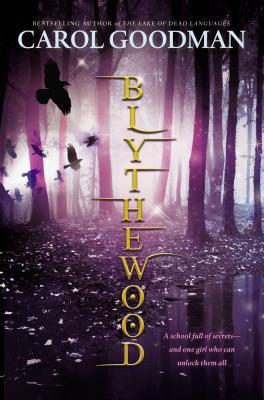
Blythewood by Carol Goodman
(Somehow I forgot to post this review on here after I put it on Goodreads. Anyway, here it is.)
She tilted her head, looking at me. “That’s one bit about Blythewood you’ll have to get used to-- all the bells. They can drive you mad sometimes. They say there was a girl a few years back who fell from the belfry while trying to muffle the bells.” Then she smiled and hurried away, leaving me with the thought that the bells inside my head were already driving me mad.Although not amazing, this book was quite good, and enjoyable. At no point did it get boring, but there were a few times where I did get annoyed with the main character. The writing, although pleasant and understandable was woven together with imagery and period words and sayings, which sometimes fit and sometimes didn’t.
Blythewood is set in 1911, to which there is no mention of in the book. It takes place between two significant events in history, the Triangle Shirtwaist Factory fire, and the sinking of the Titanic. I think incorporating the two events added to the intrigue of the story, and it made it that much more interesting. Despite being unaware that the fire was real at first, I was able to guess the time in which the story took place, because of certain words and phrases used. However, some of these phrases seemed out of place, at times. It seemed like some of them were thrown in simply to remind the reader of the time period, even though it wasn’t difficult to forget. Instead, they were unnecessary and sometimes comical, especially when used in dialogue.
From the start, we are bombarded with bird imagery. Anything and everything is compared to birds, specifically crows. This ‘rings true’ through the rest of the book, although luckily the amount of it subsides a bit once the main character, Avaline, arrives at the boarding school, Blythewood. Along with the unnerving amount of bird imagery, there is also an overabundance of bells. From the bell that Ava hears ringing in her head, to the story of the seven bells from which Blythewood was founded. While both are highly significant to the story, they are both way overused, which became quite annoying at times.
Ava’s character was overall okay. She could be brave and kind-hearted at times, but other times she became impulsive and illogical in her thinking. She so easily would start putting herself down if something went wrong, constantly calling herself a freak, despite the gift she had. She also seemed quite a bit paranoid in her way of thinking. However, she was still a decent, believable character. Also, she often thought of her old life and referred to her friends at the Triangle Factory, which was nice, rather than having her forget about it.
The other characters were okay, as well. You could see them progress and change through the story, ever so slightly, but in a natural way; Helen, Daisy and Nathan, especially. Raven was the stereotypical protector guy, who, although pleasant, didn’t have much of a personality at first. The insta-love between himself and Ava was expected and predictable, but luckily the entire story was not solely focussed on that.
The story started off kind of iffy for me. Although the fire was exciting, what came before and after it was a little bit bland. If the book had continued at that pace, I wouldn’t have liked it so much. But, then the fairies and magics were introduced. The initiation in the woods was not very believable, nor was the girls’s quick acceptance of this new information. However, after that, the whole story became so much better. I am very fond of fairies and other creatures, and this book did a wonderful job at incorporating them. The classes the girls went to were really neat, and the entire atmosphere of the boarding school was perfect.
Although some of the major events in the story were predictable, it was still a fun read. I enjoyed learning about Ava and her friends, and the Darklings and fairies. I was even more intrigued by the fact that I know where the story takes place in real life. It did have quite a few flaws that I couldn’t get over, but it was an entertaining story, with a cool atmosphere to it. The ending, although predictable, could have ended on a higher note. It only would have added to the excitement for the sequel, if we were able to see Ava’s new discovery, instead of just being told about it. Though I originally bought this book because of its gorgeous cover, I was very surprised to find it exciting and well-written. I look forward to the release of the sequel.
“There are other ways to disappear here than to go missing in the woods.”
Monday, March 17, 2014
The Thirteenth Unicorn by W. D. Newman
“The next morning dawned bright and clear. Hundreds of birds greeted the rising sun with song, each one trying to out-sing the other. Circling the patch of ground where the party slept were tracks. A visitor in the night had watched over them while they slept. The tracks were hoof prints.”
I got this book free for my Kindle on Amazon, so I went into it being quite critical, expecting it to be not nearly as good as it was. The Thirteenth Unicorn is a really nice fantasy story, full of adventure and magical creatures. Although clearly a middle grade book, the writing was surprisingly decent. However, there are a number of grammar and spellings errors, including the author never putting a comma before the word ’too’ at the end of a sentence, which bugged me a lot.
“And yet the most striking features about these men was their eyes; keen and stern, chips of blue ice burning like lamps in the gray morning light. These were elves from the Twilight.”
The length and pace of the story is perfect, not too fast, nor did it drag at any point. Aside from a quick chapter near the end, I did not get bored with the plot or its pace. It remained consistent for the most part. The ending, although predictable, was spoiled by a very sudden reveal, which I think should have been incorporated into the story, which would have made it more satisfying.
“The sky was beginning to darken to a deep purple and a couple of stars had opened their eyes to catch a glimpse of the final minutes of this last day of May, as Ben and Casey, with their two new friends, made their way back up the trail to the Langston’s backyard. New friendships had been forged this day and as the sunlight faded, so too did all thoughts of Camelot and the mysterious Merlin Tree.”
The characters, both major and minor, were enjoyable to read about. Ben and Casey, who the story is first about, are well fleshed out, unlike some of the others. Ben is a cool and quirky kid, up for anything, but always level-headed. Casey is his caring, though sometimes annoying, older sister. Their grandparents are very stereotypical county folk; although their grandmother, Louise, also reveals an adventurous side when she embarks on this story’s awesome adventure with the kids. Ben and Casey’s companions, Joey and Jenny, unfortunately have little to no voice in this story. They are simply there in the adventure. They are barely described and show no signs of personality. Aside from saying that she wants to go home, Jenny has virtually no lines. The group was always regarded as a whole, which gave no room to showcase either of them. The dwarf characters, Hob, Nob and Gob, were entertaining and comical, making the book that much more enjoyable. The world itself was also exciting to read about. The Twilight, which is the magical, forbidden wood in which the elves live, is described as being able to make itself smaller and bigger, constantly changing itself, which is a unique magical attribute.
“Home,” Ben whispered. There was more magic in that one word than existed in all of Camelot; Home.”
Although the cover and the writing errors are a bit of a turn-off, getting this story for free was an absolute steal. It was very enjoyable, and I’m tempted to buy the next book in this series. It was a great adventure, with a sweet ending, and I am glad to have taken my time to check it out.
Sunday, March 9, 2014
Into the Land of the Unicorns by Bruce Coville
"The sound of his hooves against the stony floor of the cave was like distant silver bells."
Though not quite as magical as when I read it as a child, it was nevertheless a sweet and simple story. The action begins immediately and continues at a fast pace, making it a very quick read. The main character, Cara, has an adventurous personality, making it easy for young readers to relate to her. And her trustworthy friend, Lightfoot, is the unicorn equivalent to a typical, slightly sarcastic, teenager.
"It was like drinking diamonds. She drank more, dipping her hands greedily into the stream."
The writing was surprisingly good, creating the enchanting atmosphere that I had adored my first time reading it. I feel like with just a bit more focus on the setting, the story could have been that much more believable. With its quick moving plot and a back story only told through Cara, I found it unrealistic at first, even as a fantasy story. The only thing about the writing that I didn’t like were all the questions that Cara constantly thought out loud, though I suppose as a kid’s novel they were appropriate enough.
""There’s lots of kinds of chains," he continued, "You can’t see most of them, the ones that bind folks together. But people build them, link by link. Sometimes the links are weak, snap like this one did. That’s another funny thing, now that I think about it. Sometimes when you mend a chain, the place where you fix it is strongest of all.""
The ending went by quicker that I would have liked. It came immediately after the main action of the story and was almost rushed through. It would have been nice to be able to relish in the conclusion a bit more, which, after all, was the result of the story’s great journey. Overall, I think this was a fine little story, which I’m glad to have re-read, if only to be reminded of reading it as a child. It was clearly written for kids, yet the writing maintained a smart, fluid style. I’m not sure if I will re-read the second book in this series yet or not. However, I will always remember them warmly, as one of my first unicorn (and fantasy) books.
Monday, February 24, 2014
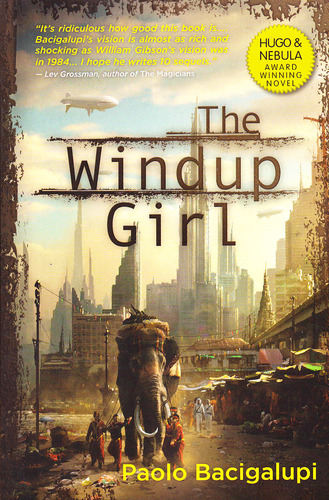
The Windup Girl by Paolo Bacigalupi
The Windup Girl is a dark, grimy book, with a very distinctive feeling to it, like a strange science fiction infused third world country. Immediately, you are thrown into a harsh, busy world, a future in the city of Bangkok, full of smoke and sweat, emphasized by Bacigalupi’s stark descriptions. At times, I found this to be overwhelming, but for the most part it was interesting and enjoyable.
Along with the two advertised characters- Anderson Lake, a determined business and calorie man, who tends to act as though he’s invincible, and Emiko, a lonely but strong girl, who is also a windup, engineered to serve humans- there are several other important main characters. Among the most significant are Hock Seng, a smart and cautious Chinese ‘yellow card’, taking refuge in a country that looks down on his kind; Jaidee, the ‘Tiger of Bangkok’ who goes to extremes in order to protect his people; and Kanya, a woman torn between her past and future, who goes to follow in Jaidee’s footsteps.
Each of these characters are essential to the story for the wide variety of perspectives they provide. For many of them, money is the driving force; for others it is freedom. Although at first it was difficult to tell who and what the story is about, it gradually begins jumping fluidly between each of them. I’m surprised they aren’t mentioned in the book’s summary.
As I progressed through the main action of the story, Bacigalupi’s writing became much more exciting. The change in character perspective makes it more potent. Because of it, you are left feeling unsure of who the ‘bad guy’ really is, giving the story and the characters more depth.
While his writing was enjoyable, Bacigalupi’s strange way of wording things seemed like an ill attempt to give his world more of a sci-fi feel, something it had naturally. From the beginning, we are introduced to a plethora of new words and names, including several Thai words, most of which can only be translated in context. Although the Thai words help emphasize the book’s unique mood, many of Bacigalupi’s made-up words feel more like they belong in Scott Westerfeld’s Uglies series. They contrast against the dark vibe of the story, something I could not get past, and one of the story’s biggest downfalls, in my opinion. Although the abundance of these strange words is confusing at first, some of them become easier to understand as the story goes on.
To me, this book isn’t simply about Anderson, the Calorie Man and Emiko, the Windup Girl, as the back cover of the book suggests. It reaches beyond the lives of those two characters, but it is through them that we are exposed to a much larger issue- what holds together one of the world’s only remaining countries, in a time when all foreign influences can be both threatening and promising.
As we learn through the character Jaidee, “all things are transient.” I found that the story does a great job at expressing this. The entire story moves at a constant pace, changing quickly with each transition between characters. As their lives move forward, so does the plot, and the city they live in. I enjoyed it more as things progressed and changed. It became easier to read and navigate through, despite stumbling on some of the words and names.
This book ended up being nothing like what I expected. It is very heavy, full of greed, sex, violence and death. It is a story that I think will continue to grow each time I pick it up to reread it. Eventually, I might be able to understand what all of the strange words mean.
Subscribe to:
Posts (Atom)